Posts

Modern food formulations use Sorbitan Monostearate as an emulsifier

Image
  In the world of food science and technology, the quest for optimal texture, consistency, and shelf life has led to the widespread use of emulsifiers. Among these, sorbitan monostearate stands out as a versatile and effective ingredient. This blog explores the role of sorbitan monostearate in modern food formulations, highlighting its benefits and applications, and why it is a preferred choice in the industry. What is Sorbitan Monostearate? Sorbitan monostearate is a non-ionic surfactant derived from sorbitol and stearic acid. It is part of the sorbitan esters family, which are known for their emulsifying properties. As a food additive, it helps in blending ingredients that typically do not mix well, such as oil and water. This characteristic makes sorbitan monostearate a valuable component in many food products. The Role of Sorbitan Monostearate in Food Formulations Emulsification One of the primary roles of sorbitan monostearate in food formulations is its ability to act as an ...

Boost Your Manufacturing Standards with Polyglycerol Polyricinoleate from Spell Organics

Image
What is Polyglycerol Polyricinoleate (PGPR)? Polyglycerol Polyricinoleate (PGPR) is a versatile emulsifier extensively used in various industries to improve product quality and manufacturing efficiency. Its importance in modern manufacturing processes cannot be overstated, as it significantly enhances product stability, texture, and cost-effectiveness. It is a complex ester derived from the polymerization of glycerol and ricinoleic acid. It is known for its unique chemical composition and beneficial physical properties, making it a popular choice in multiple industries. The manufacturing process involves a series of chemical reactions that ensure the product's purity and effectiveness. Applications of PGPR in Manufacturing Food Industry Polyglycerol Polyricinoleate is widely used in the food industry, particularly in chocolate and confectionery products. It improves the flow properties of chocolate, ensuring a smooth and consistent texture. It is also used in dairy products and bak...

Citric Acid Esters of Mono and Diglycerides: Transform Your Products with Spell Organics

Image
 What are Citric Acid Esters of Mono and Diglycerides? Citric Acid Esters of Mono and Diglycerides (CITREM) are a class of emulsifiers used widely in the food industry. They are derivatives of citric acid and mono- and diglycerides, which are types of fat molecules. These compounds are prized for their ability to stabilize and maintain the texture of processed foods, ensuring that ingredients blend well and stay mixed over time. Importance and Uses in the Food Industry Citric Acid Esters of Mono and Diglycerides play a crucial role in the production of various food products. Their primary function is to act as emulsifiers, which help to blend ingredients that typically don't mix well, such as oil and water. This quality is essential in products like baked goods, dairy products, and confectionery, where texture and consistency are key to quality. Applications in Beverages and Dairy Citric Acid Esters of Mono and Diglycerides  are also used in beverages to stabilize emu...

Polyglycerol Esters of Fatty Acids: Enhancing the Shelf Life of Bakery and Confectionery Products

Image
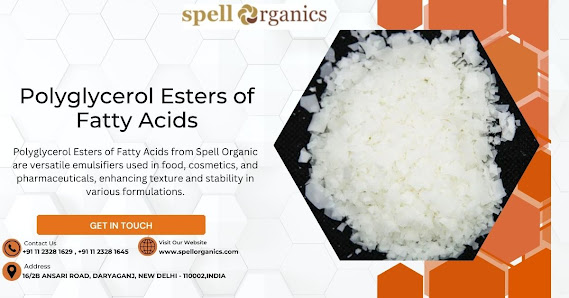
  In the modern food industry, ensuring the longevity and quality of products is paramount. Among the various additives used to achieve this, Polyglycerol Esters of Fatty Acids (PGEFAs) have emerged as a standout. These versatile compounds are increasingly being utilized to enhance the shelf life of bakery and confectionery products, offering numerous benefits that align with the goals of manufacturers and consumers alike. At Spell Organic, we are committed to exploring and leveraging such innovative solutions to improve our product offerings. What Are Polyglycerol Esters of Fatty Acids? Polyglycerol Esters of Fatty Acids are a group of emulsifiers derived from glycerol and fatty acids. These compounds are known for their ability to stabilize emulsions, improve texture, and enhance the overall quality of food products. In bakery and confectionery applications, PGEFAs play a crucial role in maintaining freshness and extending shelf life, which is essential for both commercial succes...

Glycerol Monooleate Improves Emulsification and Texture in Processed Foods

Image
In the ever-evolving food industry, the quest for improved texture, stability, and shelf life of processed foods is paramount. Among the array of food additives available, Glycerol Monooleate stands out for its versatile applications and benefits. This compound has become an essential ingredient in the formulation of various food products, enhancing both emulsification and texture. What is Glycerol Monooleate? Glycerol Monooleate, often abbreviated as GMO, is an ester formed from glycerol and oleic acid. This compound is widely used in the food industry due to its excellent emulsifying properties. Emulsifiers are crucial in food processing as they help blend ingredients that typically do not mix well, such as oil and water. By stabilizing these mixtures, emulsifiers like Glycerol Monooleate ensure that the final product has a consistent texture and appearance. The Role of Emulsifiers in Processed Foods Emulsifiers are vital in the production of processed foods. They work by reducing th...

Applications of Sorbitan Monooleate in Industrial Processes Unveiled

Image
  Sorbitan Monooleate, also known as Span 80, is a versatile non-ionic surfactant used extensively in various industrial processes. Its unique properties make it a valuable ingredient in many formulations, contributing to the efficiency and stability of products across different industries. This blog will explore the diverse applications of Sorbitan Monooleate in industrial processes, highlighting its critical role in enhancing performance and quality. What is Sorbitan Monooleate? Sorbitan Monooleate is an ester derived from sorbitol and oleic acid. It is a viscous, amber-colored liquid known for its emulsifying, dispersing, and wetting properties. These characteristics make it an ideal choice for numerous industrial applications, where it helps in stabilizing mixtures and improving the consistency of products. Emulsification in Food Production:- One of the primary applications of Sorbitan Monooleate is in the food industry, where it acts as an emulsifier. It helps in blending ing...

From Lab to Table: The Journey of Glycerol Monostearate in Food Production

Image
  Glycerol Monostearate (GMS) is a versatile ingredient that has revolutionized the food industry. Often found in a variety of food products, this compound plays a crucial role in improving texture, stability, and overall quality. At Spell Organic, we believe in educating our consumers about the ingredients in their food. In this blog, we’ll explore the fascinating journey of Glycerol Monostearate from the lab to your table. The Origin of Glycerol Monostearate Glycerol Monostearate is derived from glycerol and stearic acid, two naturally occurring substances. Glycerol is a simple sugar alcohol compound, while stearic acid is a fatty acid commonly found in vegetable fats and oils. Through a process known as esterification, these two components are chemically bonded to form Glycerol Monostearate . This process typically takes place in a controlled laboratory environment to ensure the purity and quality of the final product. The Role of Glycerol Monostearate in Food Production Glycero...